An Archive of Dissent. Son Jarocho, Countercultural Pedagogy, and the Politics of Authenticity in Post-1968 Mexico
Marino Miranda Noriega
About the research
Award
NAEd/Spencer Research Fellowship
Award Year
2026
Institution
The University of Texas at Austin
Primary Discipline
History of Education
This project examines the Son Jarocho revival in post-1968 Veracruz as a site of countercultural pedagogy. Centering the figure of Arcadio Hidalgo — a peasant jarana player constructed as a source of authentic cultural knowledge against state- and corporate-led folklorization — I trace how a youth movement reinvented peasant culture through archiving and recording practices, weaving together threads of decolonization, the 1968 student movement, and alternative pedagogies. Rather than treating the revival simply as resistance, I examine it as a field of contradictions in which the politics of authenticity generated its own hierarchies — between the traditional and the popular, the rural and the urban, the archive and the living practice it claimed to serve. Central to this project is a reconceptualization of the archive as curriculum. The figures who recorded Arcadio Hidalgo — musicians like the group Mono Blanco or historians like Antonio García de León — were not preserving the past for its own sake; they were making possible new forms of musical, poetic, and bodily practice by inscribing them into recording technologies. The archive, in this sense, was a pedagogical technology: a means of transmitting and recreating knowledge across generations, mobilized with explicit educational purposes. Drawing on oral histories and documentary traces from this movement, this project proposes an archival logic for the history of education that takes the sonic document — the field recording, the fandango, the oral history — as a form of curriculum in its own right.
About Marino Miranda Noriega
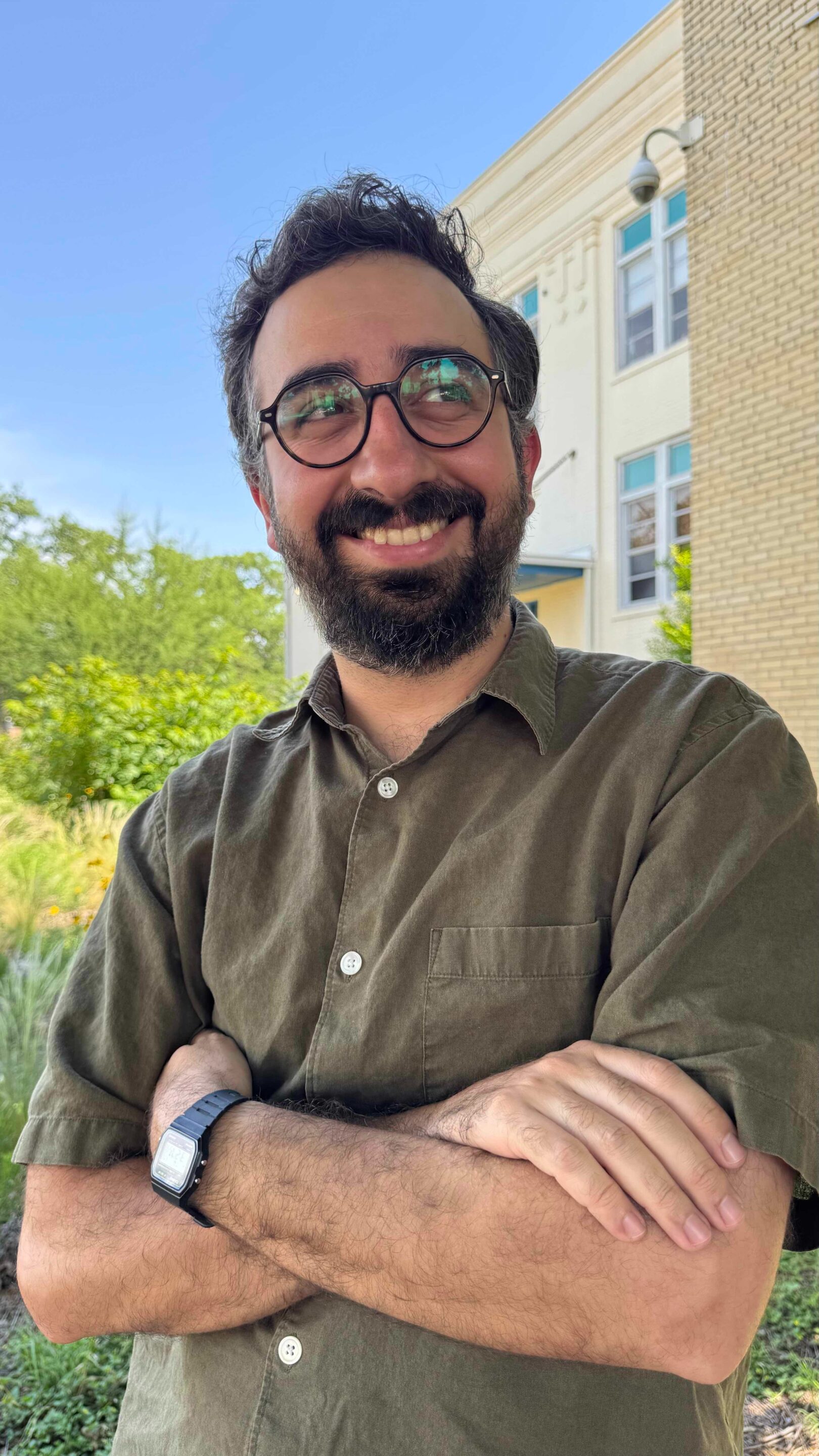
I am a historian of education specializing in modern Mexico. My research examines how educational problems — illiteracy, secularization, and rural underdevelopment — emerged as objects of state knowledge throughout the 20th Century. Rather than taking these problems as given, I trace the archival and documentary practices — censuses, school inspector reports, psychological tests, colonial manuscripts — through which the state made them thinkable and governable. My dissertation, Mission and Revolution: A Genealogy of Secular Education and the Invention of a Catholic Spirit of Schooling in Modern Mexico, analyzes the emergence of secular education as a central and contested concept in post-revolutionary reform, and is currently being developed into a book manuscript. My work has appeared in Paedagogica Historica and in The Bloomsbury Handbook of Foucault and Education. I am currently editing a special issue of Discourse: Studies in the Cultural Politics of Education titled "The Spatialization of Education and the Educationalization of Space." I got my PhD in Curriculum and Instruction at the University of Wisconsin-Madison. My second project, An Archive of Dissent, examines the Son Jarocho revival in post-1968 Veracruz as a site of countercultural pedagogy, tracing how a youth movement reinvented peasant culture through archival and recording practices in opposition to state-led folklorization. The Spencer Research Fellowship will support a postdoctoral year in the Department of History at the University of Texas at Austin.