In the Name of Unification: Moral Economy, Time, and Citizenship in Transnational Korea
Noël Um-Lo
About the research
Award
NAEd/Spencer Dissertation Fellowship
Award Year
2025
Institution
Teachers College, Columbia University
Primary Discipline
Anthropology
In contemporary South Korea, “North Korean defector youth” are celebrated by state actors as symbols of national unification under the constitutional claim that North and South are one. Yet, in recent years, most so-called “defector youth” were born not in North Korea, but in China. Born to North Korean mothers—many of whom migrated to China through coercive reproductive arrangements—and Chinese fathers, these children often arrive in South Korea as teenagers with little personal stake in unification. Still, they are recast as “defectors” in state ceremonies, media portrayals, NGO initiatives, and schools. What does it mean, then, when the “defectors” who are made to embody the promise of Korean nationhood have few cultural ties to the peninsula—and many never defected from the North at all?
Unification is at once a political mandate and an impossible dream. Amidst nuclear weapons testing, monument smashing, and other markers of intensifying North Korean hostility, the contradiction between public consensus that unification is foreclosed, and state discourse that claims it is “already here” remains unresolved. Far from dormant, unification persists as an infrastructural logic through which South Korean citizenship is mediated. Scholars have shown how the exclusion of North Koreans migrants is produced through linguistic difference and their positioning as humanitarian subjects. Yet the rapidly growing population of Chinese-born North Korean migrants remains largely understudied. Although legally naturalized and processed through the Ministry of Unification, these youth are excluded from the housing, welfare, and education subsidies reserved for those born in the North. Their ambiguous status reveals how unification operates not only as a symbolic project, but also as a regulatory apparatus organizing the differentiated forms of citizenship available to transnational migrants.
Drawing on fifteen months of ethnographic research in schools, churches, and NGOs, I trace how North Korean-background youth navigate institutions that mediate their partial recognition. Within these spaces, state and civil society actors mobilize the semiotics of Korean Protestantism through the perpetual anticipation of prophetic time (Guyer 2007). This anticipatory temporality casts displaced youth as emblematic figures within national imaginaries that demand ongoing readiness. I develop the concept of spectral citizenship to theorize how anticipation structures unstable forms of recognition through which North Korean-born and Chinese-born migrants are differentially governed. This project shows how late-liberal states reproduce nationalist projects through anticipatory governance and moral economies–and how transnational migrants strategically engage those logics to imagine futures beyond the nation.
About Noël Um-Lo
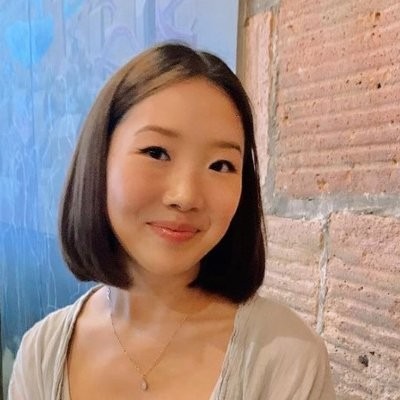
Noël Um-Lo is a sociocultural anthropologist whose research examines politics, education, and religion within the North Korean diaspora across China, South Korea, and the United States. She is interested in how states and civil society institutions map religious and political meaning onto the experience of displacement. At its core, her current project asks what it means to be folded into a nation’s future while being excluded from its present. In addition to the NAEd/Spencer Dissertation Fellowship, this research has been supported by the National Science Foundation’s Doctoral Dissertation Research Improvement Grant in Cultural Anthropology and the Teachers College Dean’s Grant for Student Research. Noël's writing has been published in City & Society, and is forthcoming in Migration Policy Institute’s Migration Information Source. She holds an M.Phil. and M.A. in Anthropology from Columbia University and a B.A. in Social and Political History from Carnegie Mellon University. Beyond her academic pursuits, she is a poet, dancer, and mother, who deeply enjoys spending quality time with the young people in her life between New York City and Seoul.