
A Knowledge With the Community: Enacting Tribal History/Shared History in an Urban Indigenous Context
Sage Hatch
About the research
Award
NAEd/Spencer Research Fellowship
Award Year
2026
Institution
University of Oregon
Primary Discipline
Indigenous Education
This collaborative study examines how Oregon's Tribal History/Shared History curriculum mandate (SB13) is enacted within an urban Indigenous-serving school in Portland. Although Oregon increasingly requires Indigenous studies in K–12 classrooms, meaningful implementation remains challenging due to political polarization, distrust of state policy, diverse tribal affiliations, and the complexities of urban Indigenous identity. Guided by Indigenous place-based epistemologies, theories of more-than-human agency, and storytelling as analysis, the study explores the teacher knowledge and practices that support meaningful Indigenous studies instruction. Using case study and narrative methods, including interviews, observations, and speculative interviewing, this study aims to document how educators navigate settler-colonial resistance, build community relationships, and sustain curricular survivance. Expected outcomes include case studies and scholarly publications that reframe teacher education as community-building and as attentiveness to the fluid, contested nature of curriculum. By extending the researcher's earlier work from rural to urban Indigenous contexts, this study offers critical insight into the conditions needed to teach Indigenous histories and contemporary realities in K–12 schools.
About Sage Hatch
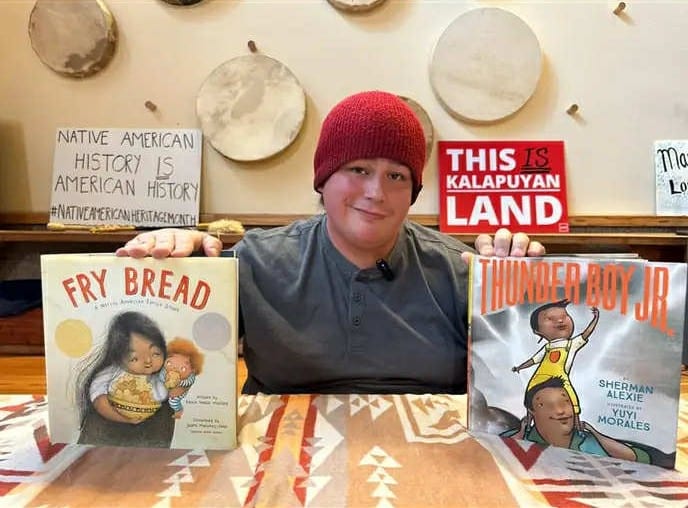
Sage Hatch is a citizen of the Confederated Tribes of Siletz, who was born and raised in Siletz, Oregon. Sage's work challenges the idea that the work of implementing curricular mandates which center Indigenous inclusion (such as SB-13 Tribal History/Shared History in Oregon) is contained primarily in the classroom; in lesson planning and instructional delivery. He documents the way teaching Indigenous studies content inevitably challenges pervasive settler colonial ideologies, precipitating pushback from students, parents, and even educators unfamiliar with this material. Sage argues that it makes more sense to think of curricula as existing at a collective level, as shifting, self-replicating discourses that circulate within communities. Sage is also the Teaching & Learning Designer for the Traditional Ecological Inquiry Program (TEIP) located in the Willamette Valley, and serving primarily urban Indigenous youth. Over the past five years, he has mentored youth in developing individual projects rooted in Traditional Ecological Knowledge, while also facilitating larger, collaborative initiatives that build community. Drawing on his training in education, curriculum development, and cultural practice, Sage guides interns to transform their personal interests into transformative projects that reignite cultural practices across the diverse Indigenous communities TEIP serves.