Latest from the Academy
NAEd Sends Letter to DHS and ICE Addressing Educational Implications of Immigration Enforcement Actions
The National Academy of Education’s Board of Directors sent a letter to the U.S. Department of Homeland Security (DHS) and the U.S. Immigration and Customs Enforcement (ICE) urging them to enact...
Remembering Ernest Morrell
It is with deep sadness that we write to inform you of the passing of our esteemed colleague and fellow Academy member, Dr. Ernest Morrell, who passed away on February 4, 2026. Below is Morrell's...
Nineteen Education Leaders and Scholars Elected to the National Academy of Education
The National Academy of Education has elected 19 distinguished education scholars and leaders to its membership, recognizing their significant contributions to education research and policy: ...

Our Members
The Academy is an honorific society consisting of U.S. members and international associates elected based on outstanding education-related scholarship.
Fellowships

Support us
Current Research Initiatives
Use of Generative AI in Assessment
Guided by the goals of creating and supporting assessments that can enhance learning for all students, this project aims to engage a broad spectrum of stakeholders in a community-wide effort to design a structured, collaborative roadmap report that will guide the ethically responsible and effective use of generative AI in learning assessments.
Implications for Education of an Integrative Synthesis of Research on Human Learning and Development
This project aims to foster a deeper understanding of the complex, dynamic processes of human learning and development. It seeks to synthesize cross-disciplinary research, create an interdisciplinary community of practice, and develop multimedia tools to engage diverse audiences. Through these efforts, this initiative highlights the embeddedness of learning and development in the ecologies of the lives of children, youth, their families and communities.
Educator Support Initiative: Evidence-Based Research for Equitable Learning Environments
The goal of this initiative is to provide evidence-based guidance to educators and policy leaders for delivering effective learning experiences that fully engage the cognitive, social-emotional, and cultural strengths and resources of all students. EAC-South and NAEd work to advise, assist, and serve public schools and districts in developing and implementing research-informed, equitable education policies and practices that ensure all students have access to high-quality, inclusive learning environments.
Educating for Civic Reasoning and Discourse
Understanding the critical importance of equipping students with the knowledge, skills, and dispositions as future problem-solvers, this NAEd initiative aims to improve students’ learning in civic reasoning and discourse by ensuring that the pedagogy, curriculum, and learning environments that they experience are informed by the best available evidence. Based on a 2021 NAEd report, the NAEd, with important practitioner partners in the field, is developing discipline-specific teacher resources to help schools and districts undertake the recommendations and insights from the NAEd report and related efforts to enhance students’ civic capacities.
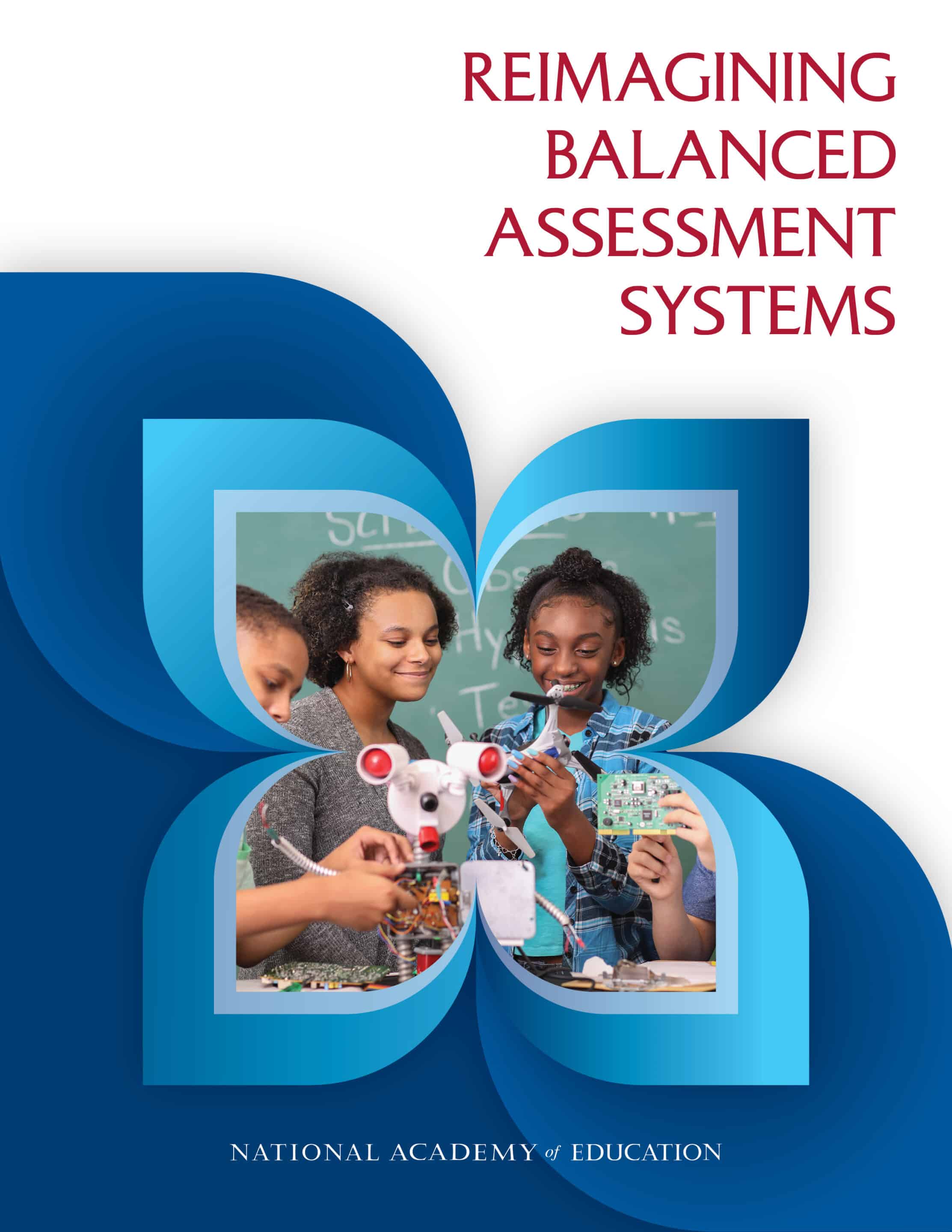
Reimagining Balanced Assessment Systems
The NAEd recently released a volume reimagining balanced assessments and providing guidance to state and local educational agencies, as well as schools and teachers, regarding how to: (1) foster and maintain a culture of productive assessment use to improve ambitious and equitable teaching and learning at the classroom level; (2) design policy, professional learning, and other local systems necessary to implement balanced assessment systems; and (3) implement processes to use aggregate data to continually improve the assessment system itself to better serve all students, especially those most disenfranchised. This work was funded by Smarter Balanced/University of California Santa Cruz.
Addressing Educational Inequities in the Wake of the COVID-19 Pandemic
The Academy received a two-year grant from the William T. Grant Foundation to sustain and advance the NAEd’s work and commitment to addressing the educational inequities resulting from and exacerbated by the COVID-19 pandemic. Guided by an interdisciplinary committee of NAEd scholars and policy leaders, this project will provide promising intervention strategies for improving student well-being and learning outcomes for disproportionately affected historically marginalized populations.
This builds on the successful NAEd project, COVID-19 and Educational Inequities, which began in May 2020 and provided needed research-based evidence on a specific set of policy and practice challenges in areas including student well-being, reading, mathematics, assessment, and institutional change.